The Breaking Point for Traditional Compliance
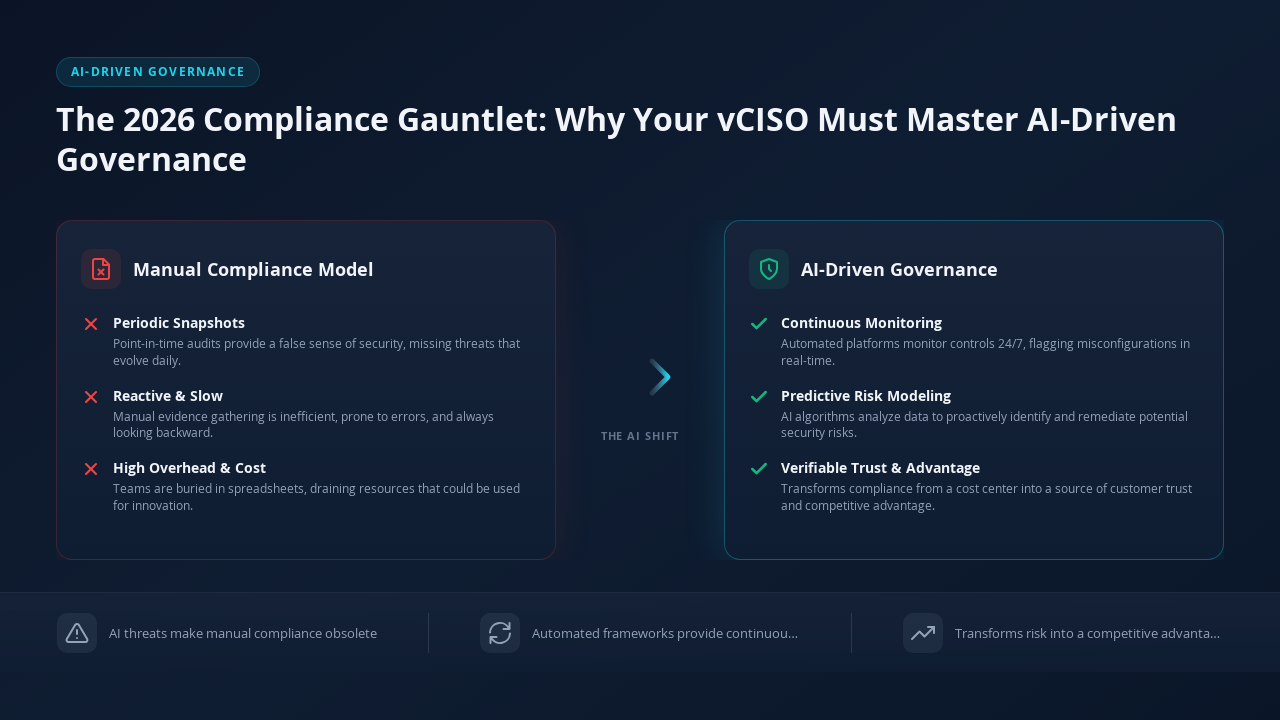
For decades, the rhythm of cybersecurity compliance has been the same: a frantic, disruptive scramble to prepare for an annual audit, followed by a collective sigh of relief once the report is issued. This point-in-time, “check-the-box” approach to frameworks like SOC 2, ISO 27001, and PCI DSS was once considered sufficient. Today, it’s a dangerous liability. Business leaders and technology executives are realizing that a clean audit report from six months ago offers little comfort—and zero defense—against a modern, AI-powered cyberattack happening right now. Traditional audits are costly, disruptive to operations, and most critically, create a false sense of security, leaving vast, unmonitored gaps where risks can fester between audit cycles. The reliance on manual evidence collection and periodic reviews is simply too slow to keep pace with dynamic cloud environments and the relentless evolution of cyber threats. This outdated paradigm fails to provide what boards and regulators increasingly demand: a real-time, verifiable view of an organization’s security posture. The future of compliance isn’t about passing a test once a year; it’s about proving resilience every single second.
AI as the Engine for Continuous Compliance Automation
The only way to close the gap left by periodic audits is to shift to a model of continuous assurance. This is where AI in cybersecurity compliance moves from a theoretical concept to a practical necessity. Continuous compliance automation leverages sophisticated algorithms and machine learning to transform how organizations manage their regulatory obligations across all compliance frameworks. Instead of auditors sampling a small subset of evidence, AI-powered platforms can monitor 100% of your cloud assets, systems, and controls, 24/7/365.
Here’s how it works in practice:
- Predictive Analytics for Risk Management: Advanced AI models can go beyond simple detection. By analyzing patterns and correlating data from multiple sources, they can predict “compliance drift”—where configurations slowly deviate from a secure baseline—and identify potential vulnerabilities before they can be exploited. This proactive stance is impossible to achieve with manual, human-led processes alone.
Beyond the Algorithm: Why the vCISO Is Indispensable by 2026
While AI provides the engine for automation, it doesn’t eliminate the need for expert human oversight. In fact, it makes it more critical than ever. An AI platform can generate thousands of data points and alerts, but it can’t understand business context, interpret nuanced risks, or communicate strategy to the board. This is where the role of the Virtual Chief Information Security Officer (vCISO) becomes indispensable. By 2026, the most effective security leaders will be those who can harness the power of AI-driven data to make strategic decisions. A Virtual CISO (vCISO) provides the strategic oversight that gives meaning to the automated data collection.
The vCISO 2026 role focuses on three key areas:
- Risk Communication and Management: An AI can flag a high-risk vulnerability, but it cannot make a nuanced risk acceptance decision based on the company’s strategic goals or budget constraints. The vCISO acts as the human-in-the-loop, contextualizing the AI’s findings and presenting a clear risk-management strategy to executive leadership and the board.
The 2026 Operating Model: AI + vCISO in Action
The convergence of these two forces—AI-powered automation and expert vCISO guidance—creates a powerful, synergistic model for continuous compliance. Imagine a mid-sized SaaS company preparing for a SOC 2 audit. In the old model, this would involve months of evidence gathering and disruption. In the new model, the process is transformed:
The AI compliance platform is already connected to their AWS environment, continuously collecting evidence and testing controls. The company’s vCISO logs into the platform’s dashboard weekly. The AI has flagged a pattern where new developers are provisioning non-compliant EC2 instances. Instead of discovering this during a frantic pre-audit rush, the vCISO sees it in real-time. They work with the Head of Engineering to immediately update the “Infrastructure as Code” templates and implement an automated guardrail to prevent it from happening again. When the auditors arrive, the vCISO simply grants them read-only access to the platform, where all evidence is neatly organized and historically logged. The audit takes days, not months, and the company has demonstrable proof of its secure and compliant operations. This proactive approach significantly reduces the risk of incidents, thereby mitigating the true cost of a data breach.
Your Roadmap to Continuous Compliance
The shift to a continuous compliance model is not a distant future—it’s a strategic mandate for survival and growth that will be non-negotiable by 2026. The proliferation of AI in the hands of both attackers and defenders means that annual, point-in-time security assessments are no longer a defensible strategy. Business and technology leaders must act now to move beyond the checklist. The path forward lies in the intelligent fusion of technology and expertise: leveraging AI in cybersecurity compliance for 24/7 automation and visibility, guided by the strategic wisdom and business acumen of a vCISO platform. This powerful combination is the definitive operating model for building a resilient, secure, and continuously compliant organization.
Get More Security Insights
Join security practitioners who receive our weekly compliance and security newsletter.
Further Reading
Ready to Scale Your vCISO Practice?
See how GetCybr helps MSPs deliver enterprise-grade security services.